
Indian Ringneck Parrots 2026 – Behavior, Diet, Habitat & Care Guide

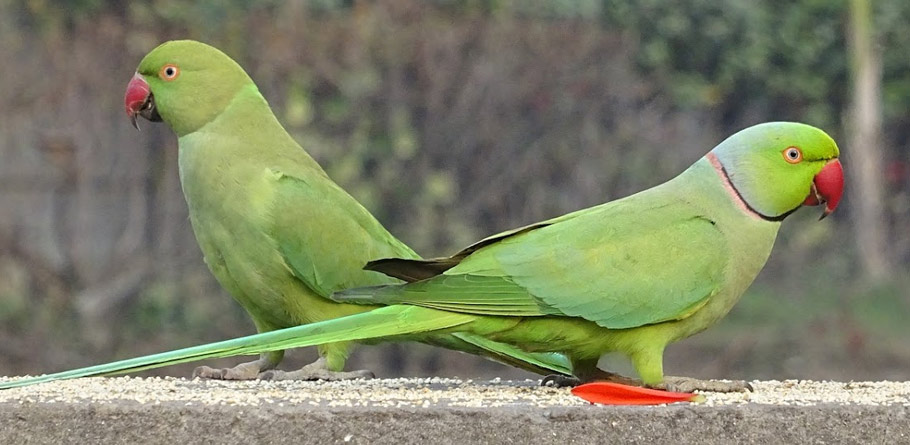
An Indian Ringneck can be a wonderful companion, but the talking videos only show part of the story. There is also the noise, the chewed-up toys, the daily cleaning and a bird that may want your company without wanting a cuddle.
The Indian Ringneck Parrot is a long-tailed parakeet known for its intelligence, colourful plumage and ability to mimic speech. It needs a balanced diet, room to fly, daily companionship and a long-term commitment. Talking is possible, but never guaranteed.
If you are considering a Ringneck in Pakistan, start with its care needs and the individual bird’s background. Colour and price can come next.
Indian Ringneck Parrot at a glance
| Question | Quick answer |
|---|---|
| Other names | Indian Ringneck, Rose-ringed Parakeet, Ring-necked Parakeet |
| Scientific name | Psittacula krameri; Indian Ringnecks are commonly identified as P. k. manillensis |
| Lifespan | Around 20–30 years, sometimes longer |
| Common colours | Green, blue, yellow/lutino, grey and white/albino |
| Can it talk? | Many learn words and sounds; individual ability varies |
| Is it quiet? | No. Be prepared for loud calls |
| Best suited to | Owners who can provide daily attention, enrichment and safe exercise |
The lifespan is a planning guide, not a promise. A Ringneck may still be with you through house moves, job changes and growing children. See the Indian Ringneck species guide for further background.
Ringneck Parrot price in Pakistan in 2026
There is no single Ringneck Parrot price in Pakistan. Colour, age, handling, demonstrated speech and the seller’s current stock all affect the asking price.
The following are advertised Taj Birds listing examples checked on 29 September 2026. They are not a nationwide market average or a guaranteed quote.
| Taj Birds listing | Displayed price | Availability note |
|---|---|---|
| Green Ringneck — female | PKR 5,500 | Confirm current stock |
| Green Ringneck — male | PKR 8,000 | Confirm current stock |
| Green Ringneck chicks | PKR 6,000 | Marked sold out when checked |
| Yellow Ringneck chicks | PKR 22,000 | Marked sold out when checked |
| Talking Green Ringneck — male | PKR 30,000 | Confirm current stock and request a recent video |
Source: Taj Birds Ringneck Parrot listings. Prices and availability can change. Ask whether a quote is for one bird or a pair, and whether transport is included.
A low purchase price does not tell you the full cost. Budget for a suitable enclosure, food, replacement toys, a travel carrier and veterinary care as well.
Are Ringneck Parrots good pets for beginners?
They can be, provided the owner is prepared to learn. A Ringneck is a demanding first pet if you expect it to stay quiet, entertain itself all day or accept handling immediately.
Some birds settle into family life confidently. Others need more time and space. Let the bird approach at its own pace, and make training a pleasant part of the day.
Before buying, ask yourself:
- Can I arrange daily exercise and social time, including on busy days?
- Will everyone at home accept loud calls and some mess?
- Is there a veterinarian nearby who treats birds?
- Who will care for the bird when I travel?
If these questions are difficult to answer, sort out the routine before bringing a bird home.
Can Indian Ringneck Parrots talk?
Yes, Indian Ringnecks can learn words and phrases, but not every bird will talk. Both males and females can mimic speech. Buying a male or paying for a particular colour does not guarantee a talker.
Start with a phrase you naturally use, such as “hello” when you enter the room. Repeat it during relaxed interactions and reward the bird’s interest with praise or a small treat. Short, enjoyable sessions are easier to maintain than a long daily lesson.
Avoid shouting or forcing the bird to perform. Learning to step onto a perch calmly is useful progress too, even if the first word takes much longer than you hoped.
If a seller advertises a talking bird, request a recent video of that individual bird speaking.
What should a Ringneck Parrot eat?
Use suitable formulated parrot pellets as the dietary foundation, with fresh vegetables, smaller portions of fruit and limited seeds or nuts. A seed-only diet is not balanced.
| Food | How to offer it |
|---|---|
| Parrot pellets | Choose a formula appropriate for the bird’s age and size |
| Vegetables | Rotate foods such as carrot, broccoli, peas and leafy greens |
| Fruit | Offer small portions of apple without seeds, mango or banana |
| Seeds and nuts | Use sparingly, including as training rewards |
| Cooked grains or lentils | Offer plain, fully cooked and cooled, without added salt or seasoning |
| Water | Keep clean water available and replace it whenever soiled |
Wash produce and bowls, and remove uneaten fresh food promptly, especially in hot weather. Avoid avocado, chocolate, caffeine, alcohol, apple seeds, stone-fruit pits and salty snacks.
If your bird currently eats only seeds, ask an avian vet to help with a gradual transition. Do not simply remove familiar food and assume it will start eating pellets. Supplements, including calcium, should be based on the bird’s diet and veterinary advice.
Browse bird food and treats at Taj Birds, then check the formula rather than choosing by brand name alone. General diet-transition principles are also discussed in VCA’s parrot feeding guidance; individual feeding plans should be species-appropriate.
What cage does a Ringneck Parrot need?
Choose an enclosure with enough clear space for movement and full wing extension, plus clearance for the long tail. Cage height alone is not enough.
A single “minimum cage size” can be misleading because the layout and time spent inside matter. The RSPCA’s housing guidance recommends dimensions based on wingspan and substantial daily access to safe flight space. For indoor birds without an aviary, it recommends at least six hours outside the cage each day.
Use natural, bird-safe perches of different diameters. Keep bowls out from under perches, and leave open space between toys. Check that the bar spacing prevents the bird from pushing its head through.
Before allowing indoor flight, close windows and doors, switch off ceiling fans and keep other pets away. Keep the bird out of the kitchen.
When comparing bird cages and stands, check the internal dimensions and bar spacing. A cage listed for “birds” may still be unsuitable for a Ringneck.
A practical daily care routine
Good care is a routine you can keep up, including on workdays.
In the morning: wash and refill bowls, offer fresh food, replace dirty cage paper and check that the bird is eating and behaving normally.
During the day: provide safe exercise, companionship and something to investigate. Foraging toys let a bird search for food instead of eating everything from an open bowl. The RSPCA’s enrichment advice includes simple food-search activities as well as daily flight.
In the evening: remove leftover fresh food and settle the bird into a consistent, quiet sleep routine.
Clean the enclosure and accessories thoroughly on a regular schedule, and sooner when needed. Inspect toys for damage as you clean. Rotate a few toys at a time so the enclosure stays interesting without becoming crowded.
Why is my Ringneck biting?
Biting can happen when a bird is frightened, uncomfortable, guarding its space or trying to end an interaction. Do not assume every bite is an inevitable “puberty phase” at a fixed age.
Look at what happened just before it: did someone reach into the cage, corner the bird or continue handling after it moved away? Give it space and reward calm, voluntary interaction. Punishment can make the next encounter harder.
A sudden behaviour change, particularly with reduced appetite or activity, deserves veterinary attention.
Ringneck care in Pakistan’s weather
Outdoor housing needs protection from heat, rain, cold, predators and escape. A cage on an exposed balcony is not a suitable substitute for a properly designed aviary.
Plan for the conditions at your own home. Can the bird move into shade throughout the day? Will it remain comfortable during a power cut? Is the enclosure protected during heavy rain?
For indoor birds, choose a well-ventilated space away from smoke and strong fumes. Ask an avian vet for advice before moving a bird accustomed to indoor conditions into permanent outdoor housing.
Health signs you should not ignore
Birds can hide illness, so small changes matter. Seek veterinary advice promptly if you notice reduced eating, unusual droppings, persistent fluffing, discharge around the eyes or nostrils, or much less activity.
Laboured or open-mouth breathing, collapse or marked weakness needs urgent veterinary attention. Do not wait for the next routine checkup.
Feather damage also needs investigation. Stress and boredom can contribute, but they are not the only possible causes. A clean cage helps with care; it does not rule out disease. Read VCA’s guide to recognising illness in pet birds and arrange preventive checkups with your bird’s vet.
What to ask before buying a Ringneck
Ask for details about the actual bird, not just a photo of the same colour.
- How old is it, and what records support that age?
- Is it fully weaned and eating independently?
- What does it currently eat?
- How does it respond to people and handling?
- Has it had a veterinary examination or any recent illness?
- What is known about its breeding and ownership history?
- If sex is important, how was it established?
For a first-time owner, choose a fully weaned bird. Hand-feeding an unweaned chick is skilled work, not a shortcut to a stronger bond.
An adult male’s neck ring can help with identification, but the absence of a ring does not prove a young bird is female. Ask about DNA sexing when a reliable answer is needed.
Frequently asked questions
Can Ringneck Parrots eat cucumber and watermelon?
Yes, washed cucumber and small pieces of watermelon flesh can be offered as part of a varied diet. They should not replace the bird’s main food.
Can I keep one Ringneck Parrot?
A single Ringneck needs dependable daily social contact and enrichment. If it will spend long periods alone, reconsider the arrangement. Adding another bird requires planning, separate initial housing and careful introductions; compatibility is not guaranteed.
Are Ringnecks good with children?
An adult should supervise interactions. Children need to respect the bird’s space and avoid grabbing it or putting fingers through the bars. A Ringneck can bite hard when frightened.
How long do Indian Ringnecks live?
Plan for roughly 20–30 years of care, with some birds living longer. Lifespan varies with health, diet and living conditions.
Is a blue Ringneck different from a green Ringneck?
Blue is a colour mutation. The bird still needs the same core care, and its colour does not tell you whether it will be friendly or learn to talk.
What is the current Ringneck Parrot price in Pakistan?
The Taj Birds listings checked on 29 September 2026 included a green female at PKR 5,500, a green male at PKR 8,000 and a talking green male at PKR 30,000. These are individual listing examples. Confirm the current quote and availability before ordering.
Considering a Ringneck from Taj Birds?
Start with the bird’s background, feeding routine and handling, then discuss colour and price. The right choice is a bird whose needs you can meet for years.
View Ringneck Parrots at Taj Birds or contact Taj Birds on WhatsApp to ask about current availability, weaning status, recent videos and suitable supplies.
